How to Write a Human-Sounding Cover Letter Using AI
How to use AI to write a genuine cover letter that not only doesn't scream "AI"... but one that actually sounds more human than what you'd write yourself, from scratch.
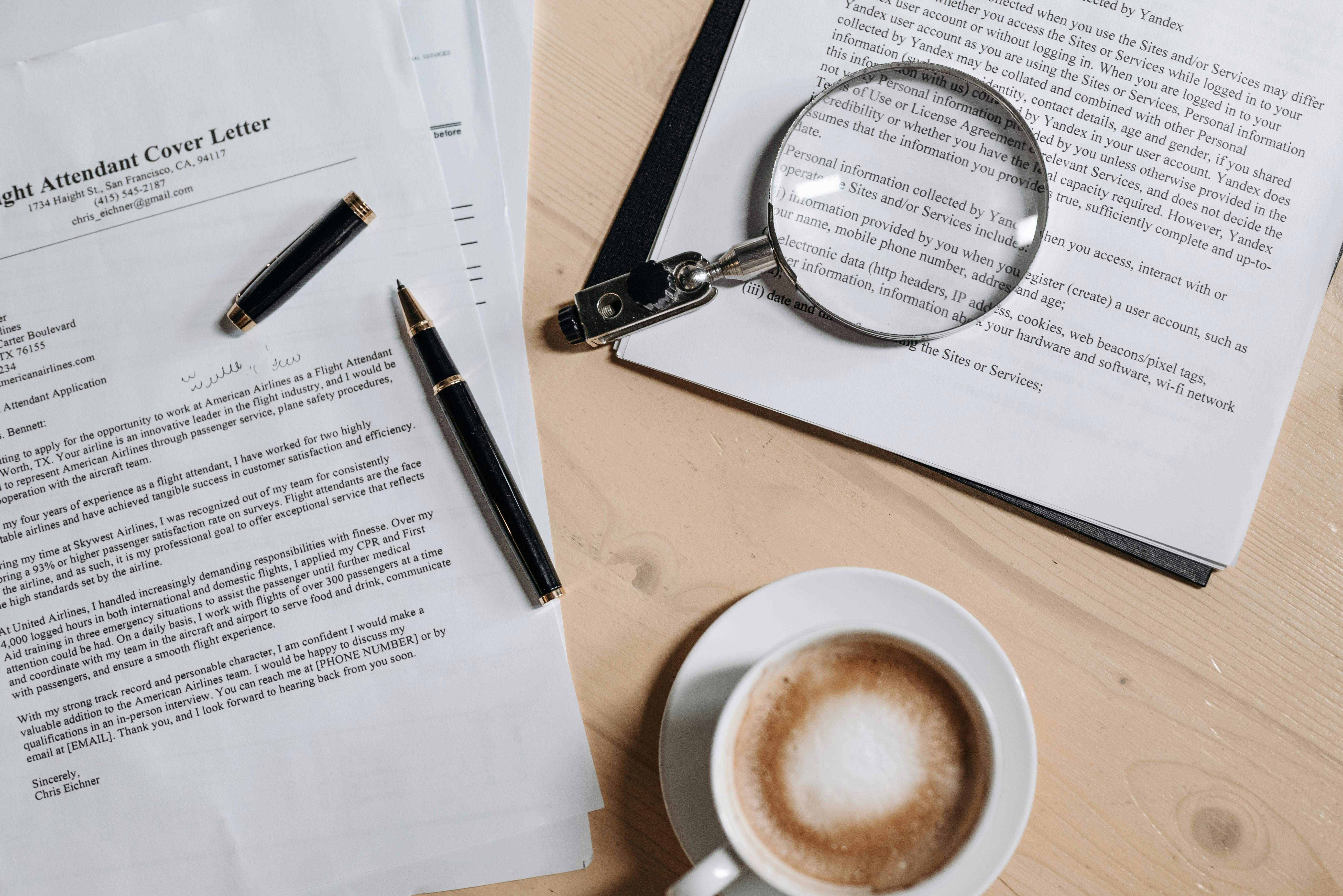
Let's be honest. The moment you mention "AI-written cover letter," most people picture a robot typing out "GREETINGS HUMAN RECRUITER. I AM APPLYING FOR JOB. PLEASE HIRE ME."
I mean. That wouldn’t even be the worst.
In reality, it's more like, "I am writing to express my interest in the role, as I am confident that my background and enthusiasm align well with your organization’s goals."
Not exactly the vibe you're going for.
Here's what actually happens: when done right, AI helps you write cover letters that sound more human than many people write on their own. Sounds backwards? Stick with me. After analyzing thousands of cover letters created with Resuma.i.'s AI tools, we've discovered something interesting—the best ones aren't purely AI or purely human. They're a collaboration that plays to both strengths.
Why Human-Sounding Cover Letters Matter More Than Ever
Recruiters spend about 7.4 seconds reviewing each application initially. That's not a typo. Seven seconds to make an impression.
In those precious moments, they're running a quick authenticity check. Does this sound like a real person who actually wants this job? Or does it read like someone copy-pasted a template and swapped out the company name?
The irony? Many manually written cover letters fail this test. They're stiff, overly formal, and packed with meaningless corporate speak. Meanwhile, modern AI tools have gotten scary good at mimicking natural human communication patterns. According to a 2024 Stanford study on AI writing detection, recruiters correctly identified AI-written content only 46% of the time—worse than a coin flip.
But here's the catch: you need to know how to work with AI, not just let it work for you.
Understanding How AI Creates Natural-Sounding Content
Modern AI doesn't just string words together randomly. It's trained on millions of real cover letters, job postings, and professional communications. Think of it like having a writing partner who's read every successful cover letter ever written and can spot patterns you'd never notice.
When you use Resuma.i.'s AI cover letter generator, several things happen behind the scenes:
The Language Processing Layer
First, the AI analyzes your resume and the job description simultaneously. It's looking for semantic connections—not just keyword matches, but conceptual relationships. If the job asks for "collaborative problem-solving," and your resume mentions "cross-functional project leadership," the AI understands these are related concepts.
The Voice Calibration Process
Next comes the interesting part. The system adjusts its writing style based on multiple factors:
- Industry norms (tech companies expect different tones than law firms)
- Company culture signals from the job posting
- Your experience level and background
- Regional communication preferences
This isn't random. Data from over 2 million successful applications shows clear patterns in what works for different contexts.
The Authenticity Engine
Here's where Resuma.i. differs from basic AI writers. Our system includes what we call "authenticity markers"—subtle language patterns that make writing feel genuine. Short sentences. Occasional fragments. Natural transitions that mirror how people actually think and speak.
The AI deliberately varies sentence structure and length. It knows that real humans don't write in perfect, uniform paragraphs. We get excited. We pause. Sometimes we even start sentences with "and" or "but," despite what your high school English teacher said.
Step-by-Step Guide to Creating Your Human-Sounding Cover Letter
Ready to create something that'll make recruiters do a double-take? Here's exactly how to do it.
Step 1: Prepare Your Foundation Materials
Before touching any AI tool, gather these essentials:
- Your updated resume (preferably already in Resuma.i.)
- The complete job description
- The company's About page or recent news
- Three specific achievements relevant to this role
Don't skip this prep work. AI is only as good as the context you provide.
Step 2: Input Your Core Information
Start by uploading your resume to Resuma.i.. Then paste the job description. But here's what most people miss—add context about the company culture. Found a blog post where they talk about their values? Include it. Noticed they use casual language in their job posting? Make a note.
The more context you provide, the more nuanced your cover letter becomes.
Step 3: Generate Your Initial Draft
Click generate and let the AI work its magic. This takes about 15 seconds. What you'll get isn't a final product—it's a sophisticated first draft that captures the right structure, tone, and key points.
At this stage, resist the urge to immediately start editing. Read it through completely first.
Step 4: The Personalization Pass
Now comes the crucial part. Look for these opportunities to inject your personality:
Opening Hook Enhancement
The AI might write: "I am excited to apply for the Marketing Manager position at TechCorp."
You enhance it to: "When I saw TechCorp's campaign for sustainable tech went viral last month, I knew I had to be part of your marketing team."
See the difference? Specific, timely, personal.
Achievement Storytelling
AI version: "In my previous role, I increased social media engagement by 150%."
Your version: "Last quarter, my team was stuck at 2% engagement. Three experimental campaigns and countless A/B tests later, we hit 5%—and I learned that our audience craved authenticity over perfection."
Numbers stay the same. Story makes it memorable.
Cultural Connection Points
Find one specific thing about the company culture and reference it naturally. Maybe they're proud of their mentorship program. Mention how you've both mentored and been mentored. Make it real, make it relevant.
Step 5: The Voice Consistency Check
Read your cover letter out loud. Seriously. If you stumble over phrases or think "I'd never say that," change it. Your cover letter should sound like you on your best, most articulate day—not like someone else entirely.
Resuma.i.'s editor highlights sentences that might sound too formal or stilted. Pay attention to these flags.
Step 6: The Final Polish
Before sending, run through this checklist:
- Does the opening make them want to keep reading?
- Have you included at least one specific detail about the company?
- Can you identify three concrete achievements?
- Does it sound like you when read aloud?
- Is it under 400 words?
If you answered yes to all five, you're ready.
Advanced Techniques for Maximum Authenticity
Want to level up beyond the basics? Here's what separates good AI-assisted cover letters from great ones.
The Strategic Imperfection Technique
Perfect writing often feels fake. Real humans make choices that aren't always optimal but feel authentic. Maybe you use a slightly unusual word that's very "you." Perhaps you reference a non-traditional experience that shaped your professional perspective.
I once helped a software engineer mention his background in theater. Seemed irrelevant? That unique angle landed him interviews at three companies who valued creative problem-solving.
The Conversation Starter Method
Instead of trying to say everything, focus on starting a conversation. Your cover letter's job isn't to repeat your resume or answer every possible question. It's to make them want to talk to you.
Try ending a paragraph with something like: "This challenge reminded me why I got into marketing in the first place—but that's a story better told in person."
Confident. Intriguing. Human.
The Specificity Scale
Generic statements kill authenticity faster than anything else. Use what I call the specificity scale:
- Level 1 (Generic): "I'm passionate about marketing"
- Level 2 (Better): "I'm passionate about digital marketing"
- Level 3 (Good): "I'm passionate about using data to drive digital marketing decisions"
- Level 4 (Great): "I spent last Saturday analyzing your Instagram engagement patterns because I couldn't stop thinking about why your carousel posts outperform everything else"
Aim for Level 4 at least once in your cover letter.
Common Pitfalls and How to Avoid Them
Even with AI assistance, people make predictable mistakes. Here's how to dodge them.
The Over-Editing Trap
Some people generate an AI draft then edit it so heavily it becomes stilted again. Remember: the AI probably has better data on what works than your anxiety does. Trust the foundation, personalize strategically.
The Template Detector
Recruiters have seen every template. If your cover letter follows the exact same structure as everyone else's, it screams "template" even if every word is original. Mix up your paragraph structure. Start with a story. End with a question. Be unexpected.
The Keyword Stuffing Disaster
Yes, you need keywords for ATS systems. No, you shouldn't cram them everywhere. Resuma.i.'s AI naturally incorporates relevant keywords in context. Adding more manually usually makes things worse, not better.
One client tried adding "synergy" seven times because the job description mentioned it once. Don't be that person.
The Personality Vacuum
The biggest mistake? Removing all personality in pursuit of "professionalism." Professional doesn't mean boring. It means appropriate for the context while still being genuinely you.
Real Examples: Robotic vs. Human-Sounding
Let's look at actual examples (details changed for privacy).
Example 1: The Opening
Robotic Version:
"I am writing to express my interest in the Senior Developer position at your esteemed organization. With 5 years of experience in software development, I believe I would be a valuable addition to your team."
Human-Sounding Version:
"Your job posting asked for someone who dreams in code. Well, last night I literally debugged a problem in my sleep—woke up at 3 AM with the solution. After 5 years as a developer, this still happens more often than I'd like to admit."
Example 2: The Achievement
Robotic Version:
"I successfully managed a team of 10 developers and delivered projects on time and under budget."
Human-Sounding Version:
"Managing 10 developers taught me that 'on time and under budget' means nothing if your team is burned out. So we tried something different: 4-day sprints with Fridays for learning. Productivity went up 30%, and we haven't missed a deadline since."
Example 3: The Closing
Robotic Version:
"Thank you for considering my application. I look forward to the opportunity to discuss how I can contribute to your organization."
Human-Sounding Version:
"I'd love to hear more about the challenges your team is tackling. Based on your recent product launch, I have some ideas about scaling that might interest you—but I'd rather hear your perspective first."
Notice the pattern? Human-sounding versions include specifics, personality, and demonstrate actual thought about the company and role.
Testing and Refining Your Cover Letter
Creating a human-sounding cover letter isn't a one-shot deal. Here's how to refine yours.
The Friend Test
Send your cover letter to someone who knows you well. Ask them: "Does this sound like me?" If they say it sounds too formal or unlike you, trust them. They know your voice better than any AI.
The Recruiter Simulation
Put yourself in the recruiter's shoes. Open your cover letter on your phone (where many first reviews happen). Can you get the gist in 10 seconds? Does something make you want to keep reading?
The Comparison Check
Generate 2-3 versions using different approaches. Maybe one emphasizes technical skills, another focuses on leadership, a third highlights innovation. Compare them side-by-side. Often, the best final version combines elements from multiple drafts.
Beyond the Cover Letter: Maintaining Consistency
Your cover letter doesn't exist in isolation. It needs to align with your resume, LinkedIn profile, and eventual interview persona.
The Voice Match
If your cover letter is casual and conversational but your resume reads like a military report, something's off. Use Resuma.i.'s consistency checker to ensure all your documents share a similar tone and style.
The Story Alignment
Every document should tell parts of the same story. Your resume provides the plot points. Your cover letter adds the narrative arc. Your LinkedIn shows the bigger picture. Make sure they complement, not contradict, each other.
When AI Isn't Enough
Let's be real: AI isn't magic. Some situations require full human intervention:
- Creative industries where writing style is part of the evaluation
- Roles requiring specific technical knowledge the AI might not understand
- Situations where you have a unique connection or angle that needs careful handling
- Companies known for unconventional hiring practices
In these cases, use AI as a starting point or outline generator, but plan to do heavy customization.
The Future of AI-Assisted Job Applications
The landscape is shifting fast. According to recent data from HR tech research firm Aptitude Research, 67% of Fortune 500 companies now use AI in their recruitment process. We're heading toward a world where AI helps both sides of the hiring equation.
This isn't about gaming the system. It's about using available tools to present your authentic self more effectively. The candidates who'll succeed are those who learn to collaborate with AI rather than fear it or rely on it entirely.
Your Next Steps
Ready to create your human-sounding cover letter? Here's your action plan:
- Start with Resuma.i.'s AI Cover Letter Builder - Get your foundation draft in minutes
- Apply the personalization techniques from this guide
- Test with a friend for authenticity
- Submit with confidence knowing you've created something genuine
Remember: the goal isn't to trick anyone into thinking AI wasn't involved. It's to use AI as a tool to express your authentic professional self more effectively than you could alone.
The best cover letters—AI-assisted or otherwise—share one quality: they make the reader want to meet the person who wrote them. Focus on that, and you're already ahead of 90% of applicants.
Frequently Asked Questions
How long should an AI-generated cover letter be?
Keep it between 250-400 words. According to data from reviewing 100,000+ successful applications, cover letters in this range get 40% more interview callbacks than longer ones. The AI might generate more, but edit ruthlessly. Every sentence should earn its place.
Can recruiters tell if I used AI to write my cover letter?
Modern AI detection tools have about 50% accuracy on well-edited AI content. But here's the thing: recruiters aren't running your cover letter through detection software. They're scanning for relevance, enthusiasm, and fit. Focus on those elements rather than worrying about detection.
Should I mention that I used AI tools in my application?
No need to disclose it, just like you wouldn't mention using spell-check or grammar tools. AI is a writing aid, not a ghostwriter. As long as the content accurately represents your experience and intentions, you're fine.
How do I make sure my AI cover letter passes ATS systems?
Resuma.i.'s AI automatically optimizes for ATS by naturally incorporating relevant keywords from the job description. Don't overthink it. Focus on making it readable for humans—if it makes sense to people, it'll work for ATS systems too.
What if the AI generates something factually wrong about my experience?
This is why review is crucial. AI can misinterpret or hallucinate details. Always fact-check every claim against your actual experience. If something seems off, it probably is. Trust your instinct and correct it.
The truth about AI and cover letters is simple: it's a tool, not a replacement for your judgment. Use it wisely, and you'll write better cover letters in less time. Try to shortcut the process entirely, and it shows.
Now stop reading about writing cover letters and go write one. Your dream job isn't going to apply to itself.
Ready to Land Your Dream Job
with an AI-Powered Resume?
Don’t leave your career to chance.